
Lockable Access Panel Plant Room: Secure Restricted Access 2026

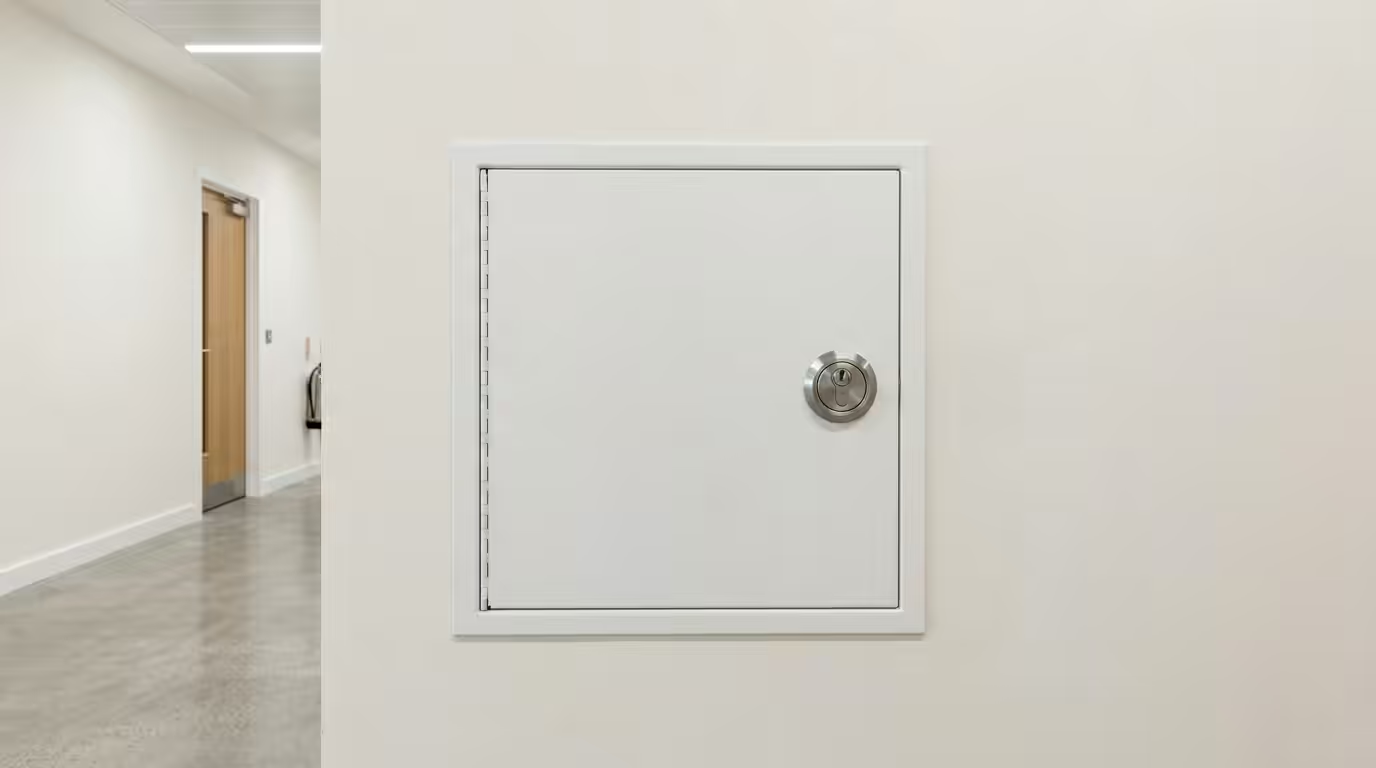
Lockable Access Panel Plant Room: Ensuring Secure Restricted Access
A lockable access panel for plant rooms provides controlled entry to mechanical and electrical equipment areas while maintaining security and regulatory compliance. These specialized panels combine accessibility for authorized maintenance personnel with robust security features to prevent unauthorized access. According to Building Regulations Part B and NHBC Standards, plant rooms housing critical building services require secure access solutions that balance operational needs with safety requirements. Modern lockable access panels achieve fire ratings up to 120 minutes while incorporating advanced locking mechanisms including key-operated locks, digital keypads, and card access systems. This comprehensive guide examines the technical specifications, regulatory requirements, and practical considerations for selecting and installing lockable access panels in commercial and residential plant room applications.
Types of Lockable Access Panel Systems for Plant Rooms
Mechanical Lock Systems
Traditional key-operated locks remain the most reliable option for plant room access panels. These systems utilize high-security cylinder locks conforming to BS EN 1303 standards, offering protection against picking and drilling. Master key systems allow facilities managers to maintain hierarchical access control while providing emergency override capabilities. Mechanical locks typically feature 5-pin or 6-pin configurations with hardened steel construction and anti-drill plates.
Electronic Access Control
Digital keypad systems provide enhanced security through programmable access codes and audit trail capabilities. These panels integrate with building management systems (BMS) and can log entry times, user identification, and duration of access. Battery-operated models ensure functionality during power outages, while hardwired versions connect directly to the building’s security network. Modern systems support up to 999 unique access codes with individual time restrictions.
Card Reader Integration
RFID and magnetic stripe card readers offer the highest level of access control for sensitive plant room environments. These systems integrate with existing security infrastructure, allowing facilities managers to grant or revoke access remotely. Proximity cards eliminate physical wear on locking mechanisms while providing detailed access logs for compliance auditing and security monitoring.
Fire Rating and Safety Requirements
BS 476 Fire Test Standards
Plant room access panels must meet specific fire resistance criteria under BS 476 Part 22 testing protocols. Standard ratings include 30, 60, 90, and 120-minute fire resistance classifications. The test evaluates integrity (preventing flame penetration), insulation (limiting temperature rise), and stability (maintaining structural performance) under controlled fire conditions. Lockable panels achieving EI 60 or EI 120 ratings incorporate intumescent seals and mineral fiber core materials.
Smoke Sealing Performance
BS EN 1634-3 governs smoke leakage testing for access panels in plant room applications. Panels achieving Sa classification demonstrate minimal smoke transmission at ambient and elevated temperatures. This performance is critical in plant rooms containing combustible materials or serving as fire compartment boundaries. Quality lockable panels incorporate EPDM gasket sealing systems providing consistent smoke barrier performance throughout the operational life.
Building Regulations Compliance
Part B of the Building Regulations requires plant room access panels to maintain fire separation between compartments. Approved Document B specifies minimum fire resistance periods based on building height, occupancy classification, and sprinkler provision. Lockable panels must carry third-party certification from CERTIFIRE or equivalent schemes to demonstrate regulatory compliance.
| Building Type | Height (m) | Required Fire Rating | Lock Specification |
|---|---|---|---|
| Residential | Up to 11 | 30 minutes | BS EN 1303 Grade 4 |
| Commercial | 11-18 | 60 minutes | BS EN 1303 Grade 5 |
| High-rise | Over 18 | 120 minutes | BS EN 1303 Grade 6 |
| Industrial | Any height | 60-120 minutes | Application specific |
Installation Requirements and Best Practices
Structural Considerations
Plant room access panels require adequate structural support to maintain fire rating performance under operational loads. Wall constructions must accommodate panel weight, which ranges from 25kg for standard 600×600mm units to 80kg for large 1200×1200mm fire-rated panels. Masonry walls require mechanical fixings rated for dynamic loads, while steel frame constructions need reinforcement plates distributing loads across multiple studs.
Service Integration
Modern plant rooms incorporate multiple utility services requiring coordinated access panel placement. Lockable panels should provide clearance for electrical conduits, water pipes, and HVAC ductwork while maintaining fire separation integrity. Service penetrations through panel frames require appropriate fire-stopping materials conforming to BS EN 1366-3 standards. Professional installation ensures service routes don’t compromise locking mechanism operation.
Maintenance Access Planning
Effective plant room design considers equipment maintenance requirements when positioning lockable access panels. British Standard BS 6173 recommends minimum 750mm clearance for routine servicing activities. Large equipment requiring periodic replacement may need panels sized for component removal, with reinforced hinges supporting increased opening forces. Emergency access routes must remain unobstructed with clearly marked panel locations.
Security Features and Access Control Integration
Multi-Level Security Systems
Advanced lockable access panels incorporate multiple security layers including mechanical locks, electronic controls, and biometric readers. These systems provide graduated access levels for different user categories: facilities management, contractors, and emergency services. Integration with existing security networks allows centralized monitoring and control through building automation systems.
Audit Trail Capabilities
Electronic locking systems maintain detailed logs of access events including user identification, entry/exit times, and attempted unauthorized access. These records support security auditing, insurance requirements, and regulatory compliance documentation. Cloud-based systems provide remote monitoring capabilities with real-time alerts for security breaches or maintenance requirements.
Emergency Override Functions
Fire service access requirements mandate emergency override capabilities for all lockable plant room panels. Systems incorporate breakaway locks, emergency key boxes, or fire service master keys conforming to local fire authority specifications. Override activation triggers automatic logging and notification to security monitoring systems.
Summary
- Lockable access panels for plant rooms must achieve fire ratings from 30 to 120 minutes under BS 476 Part 22 testing protocols while incorporating security features meeting BS EN 1303 lock grade specifications.
- Electronic access control systems provide enhanced security through programmable codes, audit trails, and building management system integration, supporting up to 999 unique access codes with time restrictions.
- Installation requires structural support calculations for panel weights ranging from 25kg to 80kg, with proper service integration and fire-stopping materials conforming to BS EN 1366-3 standards.
- Multi-level security systems combine mechanical locks, electronic controls, and biometric readers with emergency override functions for fire service access and regulatory compliance.
- Modern lockable panels achieve Sa smoke classification under BS EN 1634-3 testing while maintaining EI fire resistance ratings critical for plant room fire compartmentation requirements.
For comprehensive information about fire rated access panels and their applications, explore our detailed technical specifications. Additionally, learn about insulated access panels for enhanced thermal performance in mechanical plant installations.
Frequently Asked Questions
What fire rating is required for lockable access panels in plant rooms?
Fire rating requirements depend on building height and occupancy type. Residential buildings up to 11 meters require 30-minute ratings, commercial buildings 11-18 meters need 60-minute ratings, and high-rise buildings over 18 meters require 120-minute fire resistance under Building Regulations Part B.
How do electronic locks perform during power outages?
Battery-operated electronic locks maintain functionality for 12-24 months during power outages using lithium battery systems. Hardwired models incorporate backup battery supplies providing 72-hour minimum operation. Emergency override mechanisms ensure fire service access regardless of power status.
Can plant room access panels integrate with existing building security systems?
Yes, modern lockable panels support integration with building management systems, card access networks, and security monitoring platforms. RFID readers, digital keypads, and biometric systems connect through standard protocols including RS485, Ethernet, and wireless communication.
What maintenance is required for lockable access panel systems?
Mechanical locks require annual lubrication and inspection of cylinder mechanisms. Electronic systems need battery replacement every 2-3 years and software updates for security patches. Fire-rated panels require annual inspection of intumescent seals and gasket condition by qualified technicians.
Are there size limitations for fire-rated lockable access panels?
Standard fire-rated lockable panels range from 300×300mm to 1200×1200mm openings. Larger panels require additional structural support and may need custom fire testing validation. Maximum panel weight considerations limit single-leaf designs to approximately 100kg for standard wall constructions.