
Access Panel Swimming Pool Tiles Waterproof IP65 Rating 2026

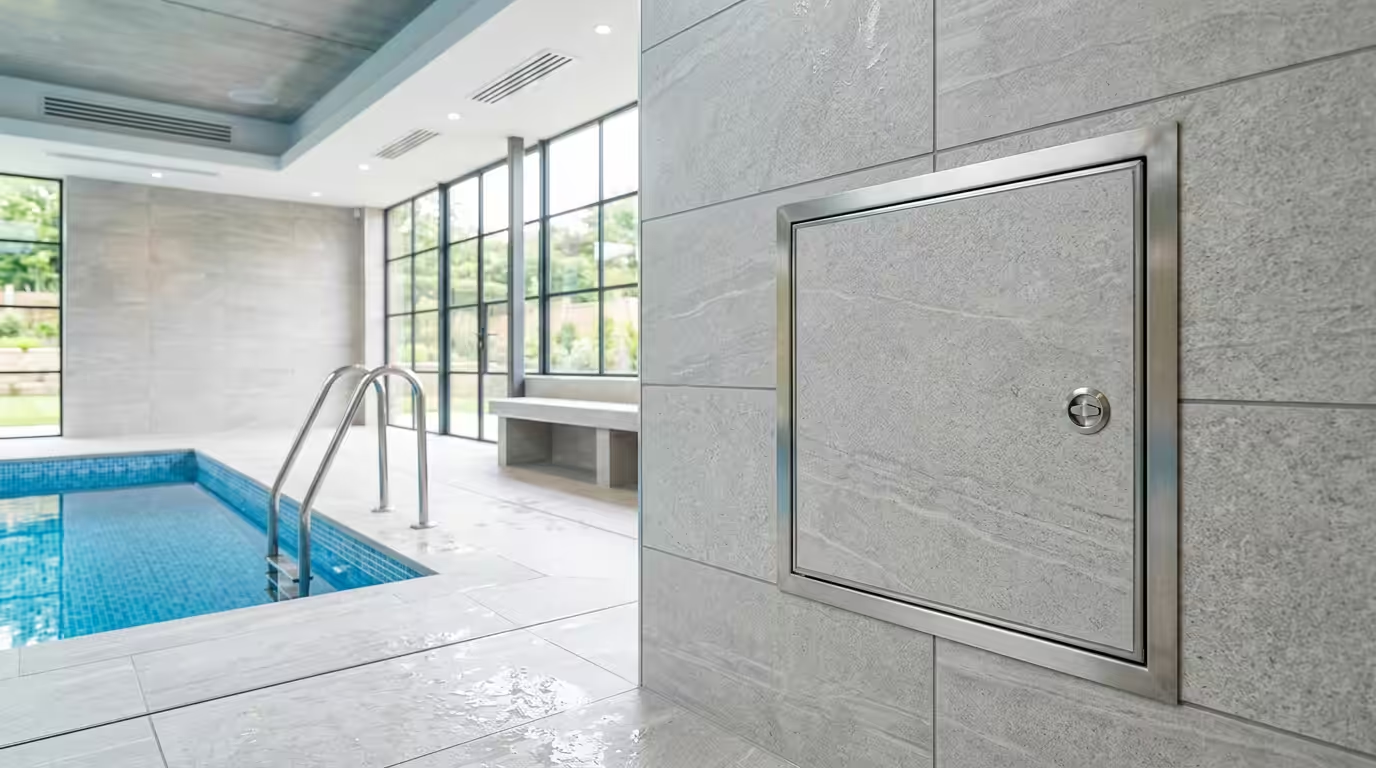
Access Panel Swimming Pool Tiles: Waterproof IP Rating Guide
Waterproof access panels for swimming pool installations require IP65 or higher ratings to withstand constant moisture exposure and chemical treatments. These specialised panels provide secure access to plumbing, electrical systems, and filtration equipment whilst maintaining complete water ingress protection. According to BS EN 60529:2013, IP65-rated panels offer dust-tight sealing and protection against water jets from any direction, making them essential for pool environments where humidity levels consistently exceed 80% and chlorine concentrations reach 1-3 ppm.
Professional pool installations demand access panels that combine aesthetic integration with technical performance. Modern waterproof access panels feature marine-grade seals, corrosion-resistant frames, and tile-ready surfaces that seamlessly blend with pool surroundings whilst providing reliable long-term access to critical infrastructure.
IP Rating Requirements for Pool Access Panels
Swimming pool environments present unique challenges requiring specific IP (Ingress Protection) ratings defined by international standard IEC 60529. Pool access panels must achieve minimum IP65 certification, though IP67 or IP68 ratings provide superior protection for submerged or splash-zone applications.
Essential IP Rating Classifications
The IP rating system uses two digits: the first indicates solid particle protection (0-6), the second indicates liquid ingress protection (0-9). For pool applications:
- IP65: Dust-tight protection, water jet resistant from any angle
- IP67: Dust-tight protection, waterproof to 1 metre depth for 30 minutes
- IP68: Dust-tight protection, continuous submersion beyond 1 metre
- IP69K: Highest protection against high-pressure, high-temperature water jets
Chemical Resistance Standards
Pool access panels must withstand chlorine concentrations up to 5 ppm, pH fluctuations between 7.2-7.6, and temperature variations from 10°C to 40°C. Materials should comply with NSF/ANSI Standard 50 for swimming pool equipment, ensuring compatibility with water treatment chemicals.
Material Selection and Construction Features
Waterproof pool access panels utilise marine-grade materials engineered for aquatic environments. Construction specifications directly impact longevity, maintenance requirements, and aesthetic integration with pool finishes.
Frame Materials and Coatings
Premium pool access panels feature 316-grade stainless steel frames with electropolished finishes, providing superior corrosion resistance compared to standard 304-grade steel. Aluminium frames require marine-grade anodising (minimum 25 microns) or powder coating specifically formulated for pool environments.
| Material | Corrosion Resistance | Chlorine Tolerance | Typical Lifespan |
|---|---|---|---|
| 316 Stainless Steel | Excellent | 5+ ppm continuous | 25+ years |
| Marine Aluminium | Good | 3 ppm continuous | 15-20 years |
| Powder Coated Steel | Moderate | 2 ppm intermittent | 10-15 years |
| UPVC Composite | Excellent | 10+ ppm continuous | 20+ years |
Sealing Systems and Gaskets
Multi-stage sealing systems utilise EPDM or silicone gaskets with Shore A hardness ratings between 60-80 for optimal compression and recovery. Primary seals prevent water ingress whilst secondary seals provide backup protection. Gasket materials must withstand ozone exposure up to 50 pphm without degradation.
Installation Methods for Tiled Pool Areas
Proper installation of waterproof access panels in tiled pool areas requires careful planning, appropriate substrates, and professional waterproofing techniques. Installation must integrate seamlessly with existing tanking systems whilst maintaining structural integrity.
Substrate Preparation and Waterproofing
Pool access panel installation begins with substrate preparation using flexible waterproof membranes compliant with BS 8102:2022. Two-part polyurethane or liquid-applied membrane systems provide continuous waterproof barriers extending minimum 150mm beyond panel perimeters.
- Apply primer to concrete or block work substrates
- Install reinforcing mesh at corners and transitions
- Apply base coat membrane in two thin layers
- Install access panel with mechanical fixings into structural substrate
- Apply detail membrane around panel frame
- Complete with topcoat membrane and tile-ready finish
Tile Integration Techniques
Professional tile integration requires removable access panel doors with tile-receiving recesses. Standard recess depths accommodate 6-10mm ceramic tiles plus 3-5mm adhesive bed. Flexible tile adhesives (C2S1 classification per EN 12004) accommodate thermal movement without compromising waterproof integrity.
Maintenance and Performance Monitoring
Regular maintenance protocols ensure continued waterproof performance throughout the access panel’s service life. Inspection schedules should align with routine pool maintenance cycles, typically every 3-6 months for commercial installations.
Inspection Checklist and Procedures
Visual inspections focus on gasket condition, frame corrosion, and tile adhesion around panel perimeters. Functional testing includes water-resistant access panel operation under typical service conditions and verification of locking mechanisms.
Critical inspection points include:
- Gasket compression and surface condition
- Frame-to-substrate connection integrity
- Tile joint sealant condition
- Internal corrosion or mineral deposits
- Locking mechanism function and alignment
Preventive Maintenance Protocols
Quarterly gasket lubrication using silicone-based lubricants prevents premature hardening and ensures consistent sealing performance. Annual deep cleaning removes chlorine deposits and mineral scale using pH-neutral cleaners approved for pool environments. Stainless steel access panels benefit from periodic passivation treatments to restore corrosion resistance.
Summary
- Swimming pool access panels require minimum IP65 rating with IP67-IP68 preferred for splash zones and submerged applications
- 316-grade stainless steel frames provide 25+ year service life in chlorinated environments up to 5 ppm concentration
- Multi-stage EPDM sealing systems with Shore A 60-80 hardness ratings ensure reliable waterproof performance
- Professional installation requires continuous waterproof membrane integration extending 150mm beyond panel perimeters
- Quarterly inspection and maintenance protocols preserve long-term waterproof integrity and operational reliability
Frequently Asked Questions
What IP rating do I need for swimming pool access panels?
Swimming pool access panels require minimum IP65 rating for splash-resistant applications, though IP67 or IP68 ratings provide superior protection for submerged installations or high-moisture environments where water jets exceed 6.3mm nozzles.
How long do waterproof access panels last in chlorinated pool water?
Premium waterproof access panels with 316-grade stainless steel construction typically last 25+ years in chlorinated environments up to 5 ppm, whilst marine-grade aluminium panels provide 15-20 years service life under similar conditions.
Can access panels be tiled to match existing pool finishes?
Yes, tile-ready access panels feature removable doors with integrated tile-receiving recesses accommodating 6-10mm ceramic tiles plus adhesive bed, ensuring seamless aesthetic integration with surrounding pool finishes.
What maintenance is required for pool access panels?
Pool access panels require quarterly gasket inspection and lubrication, annual deep cleaning to remove chlorine deposits, and periodic seal replacement every 5-7 years depending on usage intensity and chemical exposure levels.
Are there building regulations for pool access panels?
Pool access panels must comply with BS 8102:2022 for waterproofing, electrical installations require Part P compliance, and commercial pools must meet HSE guidelines for equipment accessibility and safety standards including emergency isolation access.