
Fire Rated Access Panel Care Home Hospital BS EN 1634 Guide

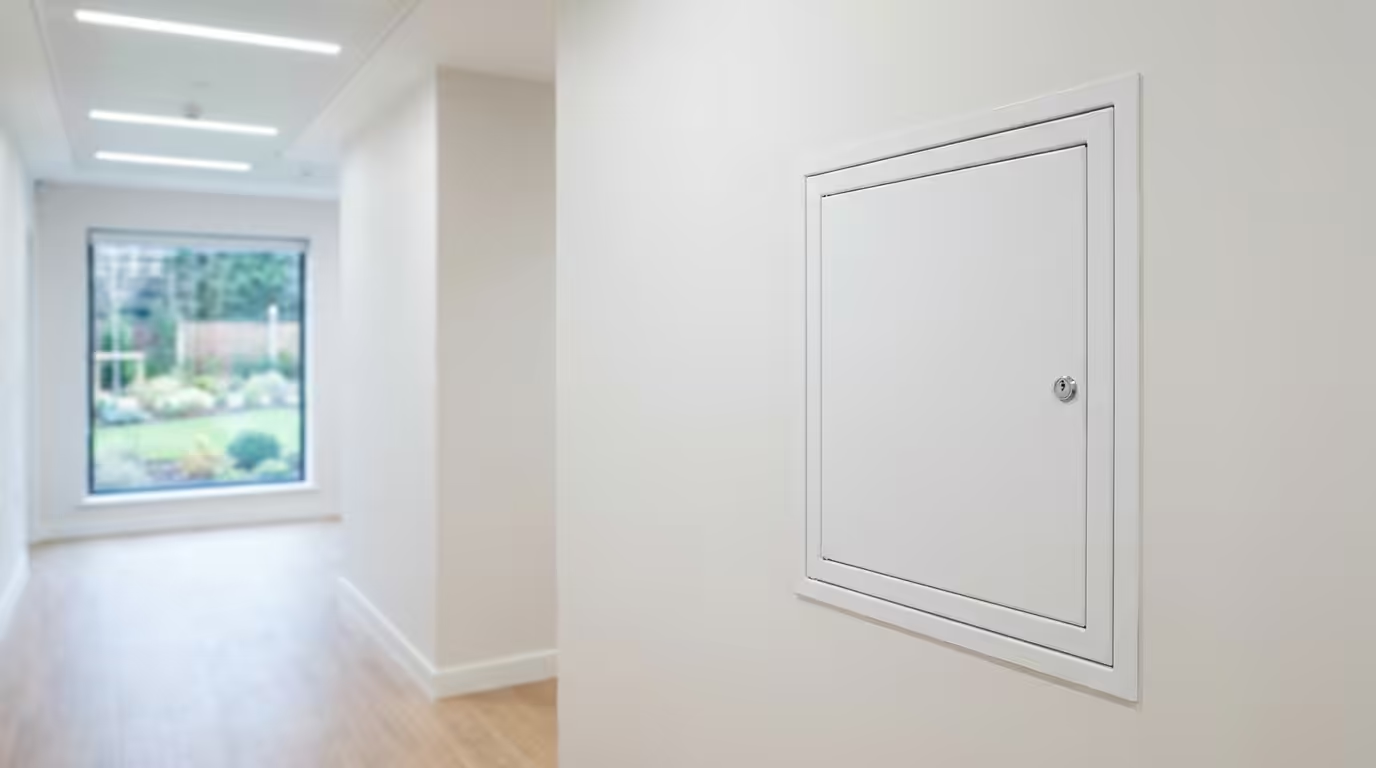
Fire Rated Access Panels for Care Homes and Hospitals: BS EN 1634 Compliance Guide
Fire rated access panels in care homes and hospitals must comply with BS EN 1634-1 fire resistance testing standards to ensure occupant safety during emergency evacuations. These critical building components provide essential access to services whilst maintaining compartmentation integrity for 60 to 120 minutes. Healthcare facilities face unique challenges with vulnerable occupants requiring assisted evacuation, making properly specified fire rated access panels essential for regulatory compliance and life safety. This comprehensive guide examines BS EN 1634 requirements, installation standards, and maintenance protocols specific to care home and hospital environments, ensuring your facility meets Building Regulations Part B and Care Quality Commission standards.
BS EN 1634-1 Fire Resistance Requirements for Healthcare Facilities
BS EN 1634-1 establishes the fire resistance test methodology for door and shutter assemblies, including fire rated access panels installed in healthcare environments. Care homes and hospitals typically require 60-minute (FD60) or 120-minute (FD120) fire resistance ratings depending on building height and occupancy classification.
Fire Rating Classifications for Healthcare Buildings
Single-storey care homes generally require 30-minute fire resistance, whilst multi-storey facilities and hospitals demand higher ratings:
- 30 minutes (FD30): Single-storey care homes under 600m² floor area
- 60 minutes (FD60): Multi-storey care homes and small hospitals
- 120 minutes (FD120): Hospitals over 30m height or high-risk areas
- 240 minutes (FD240): Critical infrastructure areas in major hospitals
BS EN 1634-1 Test Parameters
The standard evaluates three critical performance criteria during fire exposure testing. Integrity (E) measures the panel’s ability to prevent flame penetration through gaps or cracks. Insulation (I) assesses temperature rise on the unexposed face, typically limited to 140°C average or 180°C maximum at any point. Radiation (W) limits radiant heat transmission to 15 kW/m² measured one metre from the unexposed surface.
Regulatory Framework and Compliance Standards
Healthcare facilities must navigate multiple regulatory requirements beyond basic fire safety, including sector-specific guidance from NHS Estates and Care Quality Commission standards.
Building Regulations Part B Requirements
Approved Document B mandates fire resistance performance based on building use and construction. Care homes classified as Residential (Other) require different specifications than hospitals classified as Assembly and Recreation buildings. Fire rated access panels must maintain compartment integrity without compromising evacuation routes or emergency access.
Healthcare-Specific Standards
NHS Health Technical Memorandum 05-02 provides detailed guidance for medical gas and electrical installations requiring service access. Care Quality Commission Regulation 15 mandates premises safety including fire precautions. NHBC Standards Chapter 9.2 addresses fire safety in supported housing developments including care homes.
| Facility Type | Minimum Fire Rating | Regulatory Standard | Inspection Frequency |
|---|---|---|---|
| Single-storey care home | 30 minutes | Building Regulations Part B | Annual |
| Multi-storey care home | 60 minutes | Building Regulations Part B | 6 monthly |
| District general hospital | 60-120 minutes | HTM 05-02 | Quarterly |
| Major teaching hospital | 120-240 minutes | HTM 05-02 | Monthly |
Installation Requirements and Best Practices
Proper installation of fire rated access panels in healthcare environments requires specialist knowledge of both fire safety principles and infection control requirements.
Structural Integration Methods
Fire rated access panels must integrate seamlessly with existing fire barriers using tested and approved fixing methods. Steel stud partitions require specific bracket systems whilst masonry walls demand different approaches. Installation must not compromise the host wall’s fire resistance performance, requiring compatible materials and proper sealing techniques.
Service Penetration Management
Healthcare facilities contain complex service distributions requiring careful coordination during access panel installation. Medical gas pipework, electrical supplies, and data cabling must maintain fire stopping integrity whilst allowing operational access. Each service penetration requires individual fire stopping using products tested to BS EN 1366 standards.
Infection Control Considerations
Access panels in healthcare environments must facilitate effective cleaning whilst maintaining fire performance. Smooth surfaces without recessed fixings reduce bacterial harbourage points. Powder-coated steel finishes provide durability against regular disinfection with alcohol-based solutions. Stainless steel access panels offer superior corrosion resistance in high-humidity clinical areas.
Maintenance and Testing Protocols
Regular maintenance ensures fire rated access panels continue meeting BS EN 1634-1 performance requirements throughout their operational life in demanding healthcare environments.
Inspection Schedules and Procedures
Monthly visual inspections should check for damage, corrosion, or improper closure mechanisms. Quarterly functional testing verifies latch operation and seal condition. Annual detailed inspections by competent fire safety specialists assess overall system integrity including frame condition and fixing security.
Documentation and Record Keeping
Comprehensive records demonstrate ongoing compliance with regulatory requirements. Fire safety logbooks must document all inspections, maintenance activities, and remedial works. Care Quality Commission inspectors frequently review fire safety records during facility assessments. Fire rated access panel certification documents should remain readily available for regulatory review.
Common Failure Modes and Prevention
Intumescent seal degradation represents the most common failure mechanism in healthcare environments. Regular exposure to cleaning chemicals and temperature fluctuations accelerates seal deterioration. Preventive replacement every 3-5 years maintains optimal performance. Hinge mechanisms require quarterly lubrication using fire-resistant lubricants to prevent seizure during emergency conditions.
Summary
- BS EN 1634-1 fire resistance testing establishes performance criteria for access panels in healthcare facilities, with ratings from 30 to 240 minutes depending on building classification and risk assessment
- Care homes typically require 30-60 minute fire resistance whilst hospitals demand 60-120 minutes, with specific requirements varying based on building height and occupancy density
- Installation must integrate with existing fire compartmentation without compromising performance, requiring specialist knowledge of both fire safety and infection control requirements
- Regular maintenance including monthly visual inspections and quarterly functional testing ensures continued compliance with regulatory standards throughout operational life
- Proper documentation and record keeping demonstrates ongoing compliance with Building Regulations Part B, CQC requirements, and NHS estate management standards
Frequently Asked Questions
What fire rating do access panels need in care homes?
Single-storey care homes typically require 30-minute fire rated access panels, whilst multi-storey facilities need 60-minute ratings. The specific requirement depends on building height, floor area, and local authority interpretation of Building Regulations Part B.
How often should fire rated access panels be inspected in hospitals?
Monthly visual inspections and quarterly functional testing are recommended for hospital environments. Annual detailed inspections by competent specialists ensure continued BS EN 1634-1 compliance and regulatory requirements.
Can fire rated access panels be cleaned with hospital disinfectants?
Yes, properly specified panels withstand regular cleaning with alcohol-based disinfectants. Powder-coated steel and stainless steel finishes provide optimal durability against healthcare cleaning protocols without compromising fire performance.
What happens if a fire rated access panel fails inspection?
Failed panels require immediate remedial action including temporary fire stopping measures until compliant replacement installation. Facilities must document all remedial works and re-inspection results for regulatory compliance demonstration.
Are there special requirements for access panels in operating theatres?
Operating theatres may require higher fire ratings (60-120 minutes) and specialist finishes meeting infection control standards. Additional considerations include electromagnetic compatibility for sensitive medical equipment and pressure differential maintenance.