
Access Panel Plasterboard Thickness: 12.5mm vs 15mm Guide 2026

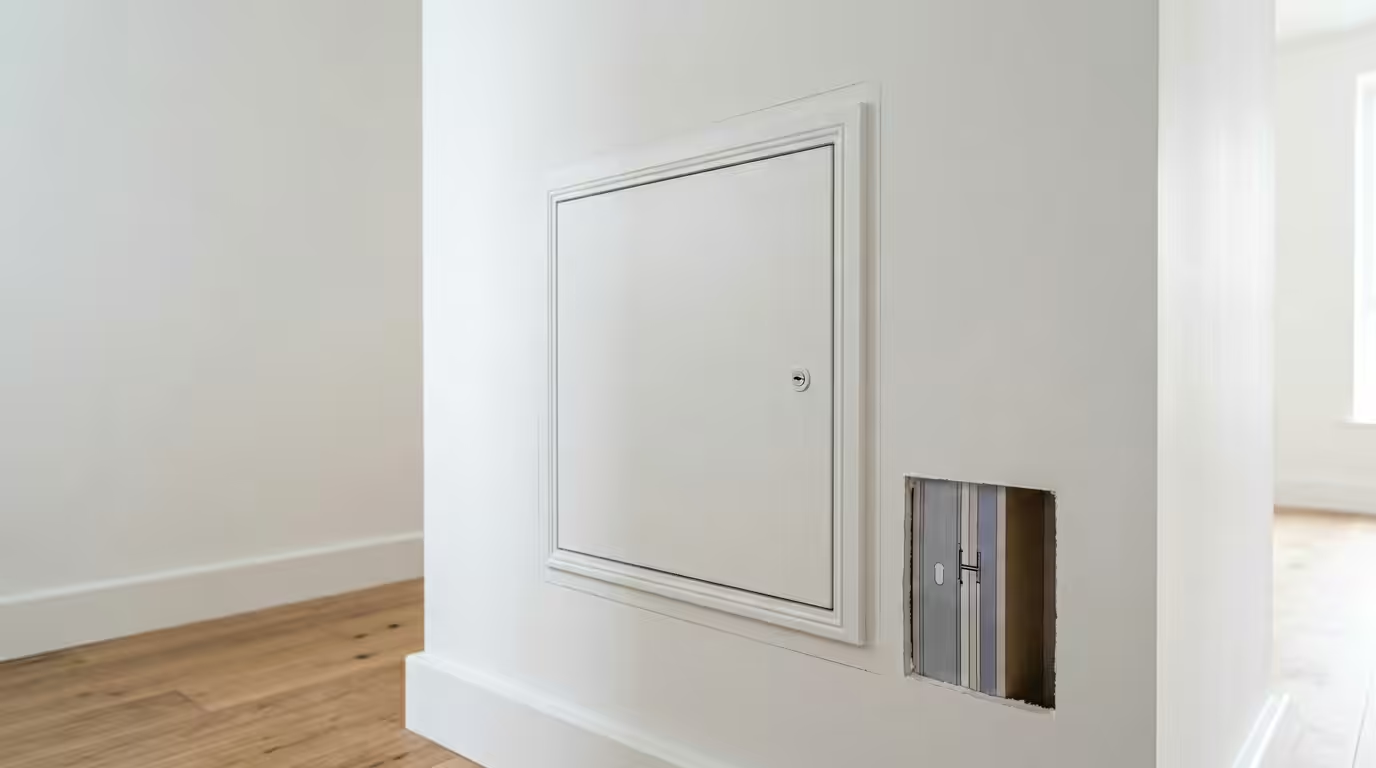
Access Panel Plasterboard Thickness: 12.5mm vs 15mm Professional Guide
Access panel plasterboard thickness directly impacts structural integrity, fire resistance, and acoustic performance in building applications. Standard UK construction typically uses 12.5mm plasterboard for most residential applications, while 15mm boards provide enhanced durability for commercial and high-traffic areas. According to BS 1230:1985 and current Building Regulations Part B, the correct thickness selection affects compliance with fire safety requirements and determines the panel’s load-bearing capacity. This comprehensive guide examines the technical differences, application suitability, and installation considerations for both 12.5mm and 15mm plasterboard access panels, ensuring optimal performance and regulatory compliance.
Technical Specifications and Performance Characteristics
12.5mm Plasterboard Access Panels
Standard 12.5mm plasterboard access panels offer a density of approximately 760 kg/m³ and provide adequate structural performance for typical residential applications. These panels achieve 30-minute fire resistance when properly installed with appropriate sealing systems, meeting BS EN 1634-1 requirements for fire-rated assemblies. The reduced thickness allows for easier cutting and installation while maintaining sufficient rigidity for access frequencies up to 50 operations annually.
Load-bearing capacity for 12.5mm panels reaches 25kg when properly supported across a 600mm span, making them suitable for accessing lightweight services such as electrical wiring, low-pressure plumbing, and telecommunications equipment. Sound reduction properties achieve approximately 35dB reduction when installed in standard partition systems.
15mm Plasterboard Access Panels
Enhanced 15mm plasterboard access panels deliver superior structural performance with increased density of 850 kg/m³. These panels provide 60-minute fire resistance in fire-rated partition systems, exceeding requirements for most commercial applications under Building Regulations Part B. The additional thickness significantly improves impact resistance and reduces deflection under load.
Load-bearing capacity increases to 40kg across a 600mm span, accommodating heavier service installations including HVAC components, larger electrical panels, and commercial plumbing fixtures. Acoustic performance improves to approximately 42dB sound reduction, making 15mm panels ideal for office environments and noise-sensitive applications.
Application Suitability and Selection Criteria
Residential Applications
For residential properties, 12.5mm plasterboard access panels typically provide adequate performance for accessing domestic services. These applications include consumer units, stopcock valves, underfloor heating manifolds, and telecommunications equipment. The standard thickness aligns with typical wall construction using 12.5mm plasterboard throughout the property, ensuring consistent appearance and performance.
However, areas subject to higher moisture levels, such as en-suite bathrooms or utility rooms, may benefit from 15mm moisture-resistant plasterboard access panels. The increased thickness provides additional protection against water penetration and improves long-term durability in challenging environments.
Commercial and Industrial Requirements
Commercial buildings require 15mm plasterboard access panels in most applications due to increased fire safety requirements and higher access frequencies. Office environments, healthcare facilities, and educational buildings typically specify 15mm panels to meet enhanced fire ratings and accommodate regular maintenance access.
Industrial applications often demand custom solutions with reinforced frames, but 15mm plasterboard provides the baseline specification for standard commercial access requirements. The improved impact resistance proves essential in high-traffic areas where accidental contact may occur.
Installation Considerations and Technical Requirements
| Specification | 12.5mm Panels | 15mm Panels |
|---|---|---|
| Weight per m² | 9.5kg | 12.7kg |
| Fire Rating | 30 minutes | 60 minutes |
| Load Capacity (600mm span) | 25kg | 40kg |
| Sound Reduction | 35dB | 42dB |
| Typical Cost per m² | £18-22 | £24-28 |
Frame Requirements and Support Systems
Installation of access panels requires appropriate frame systems matched to plasterboard thickness. Standard 12.5mm panels work with lightweight aluminium frames, while 15mm panels may require reinforced steel frames for optimal performance. Frame depth must accommodate the increased thickness to ensure proper closure and sealing.
Support systems for larger panels (exceeding 600mm x 600mm) require additional consideration. Fire-rated access panels demand specific frame specifications to maintain fire integrity, particularly important when upgrading from 12.5mm to 15mm configurations.
Compliance and Certification Standards
Both thicknesses must comply with relevant British Standards including BS 1230 for gypsum plasterboard and BS EN 1634 for fire resistance testing. LABC approval requires documented compliance for fire-rated installations, while NHBC Standards provide guidance for residential applications.
Quality assurance testing includes load testing, fire resistance verification, and acoustic performance validation. Professional installation ensures compliance with manufacturer specifications and maintains warranty coverage. Consider moisture-resistant access panels for wet areas regardless of thickness selection.
Cost Analysis and Long-term Value
Initial Investment Comparison
Material costs for 15mm plasterboard access panels typically exceed 12.5mm options by 25-30%, reflecting increased material content and enhanced performance characteristics. Installation labour remains similar, though handling of heavier panels may require additional care during positioning and alignment.
Project specifications often determine thickness requirements, with commercial applications justifying the premium cost through enhanced fire safety and durability. Residential projects may achieve adequate performance with 12.5mm panels, though upgrade costs remain modest for improved long-term performance.
Lifecycle Performance and Maintenance
Long-term performance analysis shows 15mm panels provide extended service life in high-access applications. Reduced maintenance requirements and improved damage resistance offset initial cost premiums over typical 20-year building lifecycles.
Warranty coverage often extends longer for 15mm panels, reflecting manufacturer confidence in enhanced durability. Professional maintenance schedules recommend inspection intervals of 5 years for 12.5mm panels compared to 7 years for 15mm configurations in similar applications.
Summary
- 12.5mm plasterboard access panels provide 30-minute fire resistance and 25kg load capacity, suitable for residential applications with moderate access requirements
- 15mm plasterboard access panels offer 60-minute fire resistance and 40kg load capacity, essential for commercial buildings and high-traffic areas
- Cost differential between thicknesses ranges from 25-30%, justified by enhanced performance and extended service life in demanding applications
- Installation requires appropriate frame systems matched to plasterboard thickness, with reinforced supports recommended for panels exceeding 600mm dimensions
- Both thicknesses must comply with BS 1230 and BS EN 1634 standards, with LABC approval required for fire-rated installations in commercial properties
Frequently Asked Questions
What thickness plasterboard should I use for bathroom access panels?
Use 15mm moisture-resistant plasterboard for bathroom access panels. The increased thickness provides better protection against humidity and water vapour, while moisture-resistant properties prevent deterioration in wet environments. This specification aligns with Building Regulations requirements for wet areas.
Can I mix 12.5mm and 15mm access panels in the same building?
Yes, you can use different thicknesses based on specific application requirements. Use 15mm panels in high-traffic commercial areas and fire-rated zones, while 12.5mm panels suffice for low-access residential applications. Ensure consistent fire ratings within each fire compartment.
How much weight can a 15mm plasterboard access panel support?
A properly installed 15mm plasterboard access panel supports up to 40kg across a 600mm span when mounted in an appropriate frame system. For heavier loads, consider reinforced frames or alternative panel materials such as steel or composite options.
Do thicker access panels provide better sound insulation?
Yes, 15mm plasterboard access panels provide approximately 42dB sound reduction compared to 35dB for 12.5mm panels. This 7dB improvement significantly enhances acoustic performance in noise-sensitive environments such as offices, healthcare facilities, and residential party walls.
What fire rating do I need for commercial access panels?
Commercial access panels typically require 60-minute fire resistance to comply with Building Regulations Part B. This necessitates 15mm fire-rated plasterboard with appropriate sealing systems. Residential applications may use 30-minute rated 12.5mm panels unless specifically required otherwise by building control.