
Access Panel Plasterboard Bathroom: Complete Installation Guide 2026

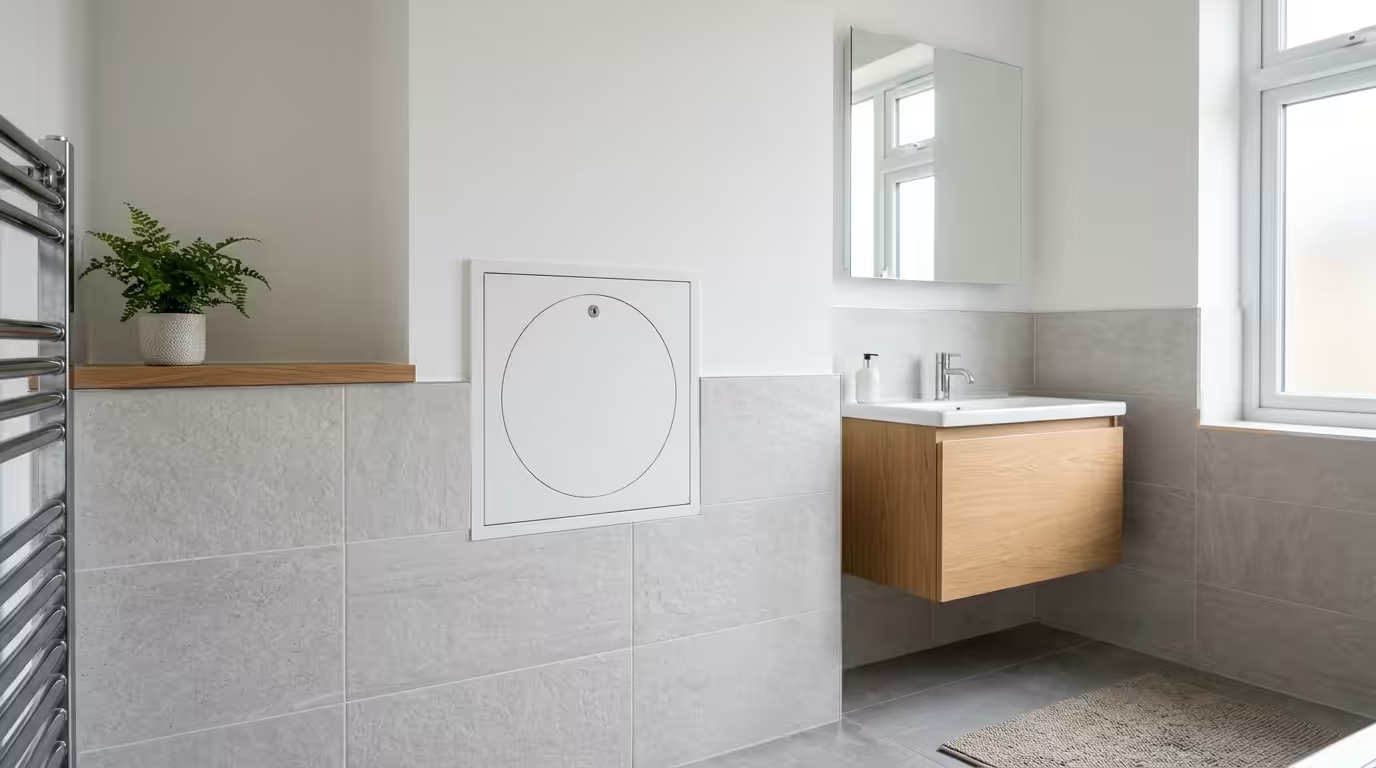
Access Panel Plasterboard Bathroom: Complete Installation Guide
Access panels in plasterboard bathroom walls provide essential maintenance access to concealed pipework, electrical installations, and heating systems while maintaining water resistance and aesthetic continuity. In bathroom environments, these panels must achieve IP65 rating minimum and comply with Building Regulations Part C (Site preparation and resistance to contaminants and moisture). Professional installers report that correctly specified bathroom access panels reduce maintenance call-outs by up to 40% whilst preventing costly water damage to concealed services. This comprehensive guide covers specification requirements, installation procedures, and regulatory compliance for plasterboard bathroom access panels.
Regulatory Requirements and Standards
Bathroom access panels must satisfy stringent regulatory requirements due to the high-moisture environment and potential exposure to water ingress.
Building Regulations Compliance
Part C of Building Regulations mandates that access panels in wet areas demonstrate adequate moisture resistance. The panel assembly must achieve continuity with the surrounding plasterboard system’s vapour control performance. NHBC Standards (Chapter 6.1) specify that access panels in Zone 1 and Zone 2 bathroom areas require sealed perimeters and moisture-resistant materials throughout the construction depth.
Water Resistance Standards
Access panels for bathroom installations must meet BS EN 60529 IP rating requirements. Zone 0 (bath/shower interior) demands IP67 rating, Zone 1 (above bath to 2.25m height) requires IP65 minimum, and Zone 2 (0.6m radius from bath/shower) needs IP44 protection. Professional specifications typically exceed these minimums, with IP65-rated panels standard across bathroom installations.
Fire Performance Requirements
Plasterboard bathroom access panels must maintain the fire resistance rating of the surrounding wall construction. BS 476-22 testing confirms that correctly installed access panels achieve 30-minute fire resistance when integrated with 12.5mm fire-rated plasterboard systems. The panel frame and door assembly must not compromise the wall’s structural fire performance.
Material Selection and Specifications
Selecting appropriate materials for bathroom access panels requires careful consideration of moisture resistance, durability, and compatibility with plasterboard systems.
Frame Materials
Aluminium frames provide optimal corrosion resistance in bathroom environments, with marine-grade 6063-T6 alloy offering 25-year service life expectancy. Stainless steel alternatives (Grade 316) deliver superior chemical resistance but increase material costs by approximately 30%. Galvanised steel frames require powder coating to achieve acceptable bathroom performance, with polyester powder coatings providing 15-year durability in high-humidity conditions.
Sealing Systems
EPDM rubber seals offer superior long-term performance in bathroom applications, maintaining elasticity across temperature ranges from -40°C to +150°C. Professional installations utilise continuous compression sealing around the complete panel perimeter, achieving 0.1mm maximum gap tolerance. Silicone secondary sealing provides additional moisture protection, with neutral-cure formulations preventing corrosion of metal components.
Door Construction
Insulated door panels incorporate moisture-resistant core materials between galvanised steel facings. Polyurethane foam cores provide thermal continuity whilst maintaining structural integrity under 50kg/m² loading. Alternative honeycomb aluminium cores reduce weight by 40% whilst achieving equivalent strength performance, particularly beneficial for larger panel installations above 600mm × 600mm.
Installation Procedures and Best Practices
Professional installation of plasterboard bathroom access panels requires precise measurement, appropriate fixings, and systematic sealing procedures.
Opening Preparation
Cut plasterboard openings 3mm larger than panel frame external dimensions to accommodate sealant application. Use reciprocating saws with fine-tooth blades to minimise paper face damage. Remove all loose material and dust from opening perimeters using vacuum extraction. Check opening squareness using 3-4-5 triangle method, with maximum diagonal variance of 2mm acceptable.
Frame Installation
Position frame assembly within opening ensuring equal margins around complete perimeter. Apply structural adhesive sealant to frame rear flange before final positioning. Secure frame using appropriate fixings: 5mm × 50mm plasterboard fixings at 150mm centres for standard loadings, or M6 through-bolts for heavy-duty applications exceeding 25kg panel weight.
| Panel Size | Fixing Type | Spacing | Load Capacity |
|---|---|---|---|
| 200mm × 200mm | Plasterboard screws | 100mm centres | 15kg |
| 400mm × 400mm | Plasterboard screws | 150mm centres | 25kg |
| 600mm × 600mm | Through bolts | 200mm centres | 40kg |
| 800mm × 800mm | Through bolts | 150mm centres | 60kg |
Sealing and Finishing
Apply primary seal using neutral-cure silicone sealant around complete frame perimeter, maintaining 3-5mm continuous bead width. Tool sealant joints to achieve smooth concave profile, removing excess material immediately. Allow 24-hour cure period before applying decorative finishes. Secondary vapour barrier sealing may be required behind frame assembly depending on wall construction details.
Maintenance and Performance Monitoring
Regular maintenance ensures continued performance and regulatory compliance of bathroom access panels throughout their service life.
Inspection Schedule
Conduct visual inspections every 6 months, checking seal integrity, frame condition, and door operation. Annual detailed inspections should include seal compression testing and water resistance verification. Document inspection results and maintain service records for warranty and insurance purposes. Replace seals showing permanent deformation or surface cracking immediately.
Performance Criteria
Monitor door closing force (should not exceed 20N), seal compression (minimum 20% of original thickness), and visual seal continuity. Water penetration testing using AAMA 501.1 methodology confirms IP rating maintenance over service life. Professional testing equipment can verify ongoing compliance with original specification parameters.
For comprehensive guidance on bathroom installations, consult our detailed moisture resistant access panels specification guide. Additional technical support for complex installations is available through our technical support service.
Summary
- Bathroom access panels must achieve minimum IP65 water resistance rating and comply with Building Regulations Part C moisture control requirements
- Aluminium frames with EPDM sealing systems provide optimal 25-year service life in high-humidity bathroom environments
- Professional installation requires 3mm oversized openings, structural adhesive sealing, and appropriate fixing selection based on panel size and loading
- Regular 6-monthly inspections and annual detailed assessments ensure continued performance and regulatory compliance throughout service life
- Correctly specified bathroom access panels reduce maintenance requirements by up to 40% whilst preventing water damage to concealed services
Frequently Asked Questions
What IP rating do I need for bathroom access panels?
Bathroom access panels require minimum IP44 rating in Zone 2 areas, IP65 rating in Zone 1, and IP67 rating in Zone 0. Most professional installations specify IP65 throughout bathroom areas for consistent protection levels.
Can I install access panels myself in bathroom areas?
While DIY installation is possible, bathroom access panels require precise sealing and regulatory compliance knowledge. Professional installation ensures Building Regulations compliance and long-term water resistance performance.
How often should bathroom access panel seals be replaced?
EPDM rubber seals typically require replacement every 10-15 years in bathroom environments. Inspect seals every 6 months and replace immediately if cracking, permanent deformation, or water penetration occurs.
What size access panel do I need for bathroom pipework?
Minimum 400mm × 400mm panels provide adequate access for standard bathroom pipework maintenance. Larger 600mm × 600mm panels suit complex installations with multiple services or future upgrade requirements.
Do bathroom access panels affect home insurance coverage?
Properly installed bathroom access panels that comply with Building Regulations and maintain water resistance ratings do not negatively impact insurance coverage. Poor installations or non-compliant panels may void water damage claims.